The Best Bike Ride in America

Cycle Oregon Blog

It’ll Change You for Good

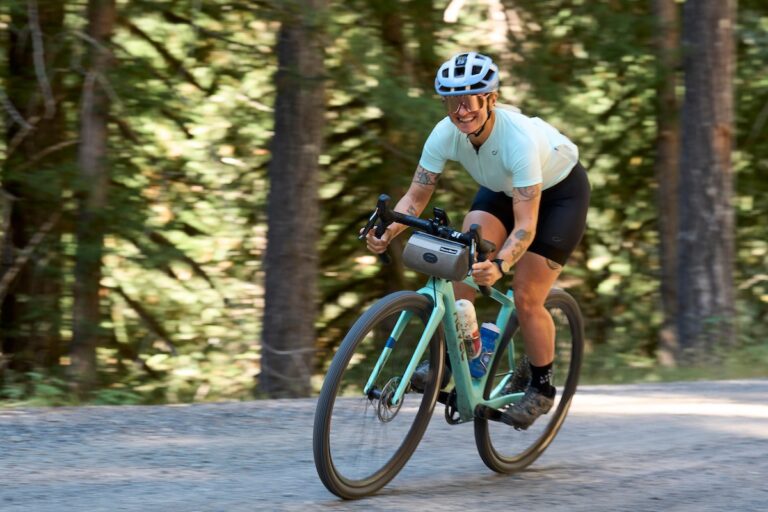
We hear it a lot: “Cycling changed my life,” or “Bike touring changed my life,” or “Cycle Oregon changed my life.” But what does that actually mean for an adult? It’s much easier to understand the impact of cycling on kids. The joy of learning to balance, the broken body parts, and the sense of freedom it gave us all played an obvious role in making us who we are today.

However, those who stuck with the bike – or rediscovered it as an adult – know that this is just the beginning. If you live in a remotely bike-friendly urban area, spend a few minutes sitting by the side of a road or a bridge heavily used by self-propelled commuters. The smile-to-frown ratio is 10:1. Now take a look at the faces of the folks sitting in their cars.

I can vividly recall a beautifully voyeuristic moment when I once spotted a dear friend of mine on her ride home from work from the hidden vantage point of a restaurant where I was enjoying a bite with another cyclist friend. It was a beautiful spring day in Portland – one of those days that makes locals remember why we put up with nine straight months of rain. Her skirt flowed as her thick mane of vibrant red hair trailed behind an angelic face that registered sheer bliss and utter contentment. In that moment, she wasn’t commuting; she was living. It was one of the most beautiful sights I’ve ever seen. I know for a fact cycling has changed her life, just as introducing her and others to the joys of the bicycle has changed mine.

Cycling represents a lot of things to a lot of people. Those who have raised a stiff and defiant middle finger to cancer or other tragedies use it as a way to celebrate their victory and embrace life (and, yes, it’s still perfectly fine to be grateful to Lance if he gave you the idea or provided inspiration). The same goes for recovering addicts or even recovering couch potatoes. Many of us aren’t so lucky as to naturally have the urge to constantly stay active, and the threat of slipping into sedentary mode is always there. Riding provides an ideal way to stay on the primrose path.

Just ask future Cycle Oregon rider Audra Hermes. Fewer than two years ago, she was suffering from Type 2 diabetes and obesity, and realized it was time for a change. She changed her diet, took up riding and has since dropped 37 pounds. She is diabetes-free and recently bagged her first half-century. She’s getting ready for her first metric century now (which she’ll do on a mountain bike, no less). Where she goes from there is anybody’s guess, but she’s got the bug pretty bad. Don’t be surprised to see her whiz by you some day on her first double-century.

2012-11-12951195299503Like centuries (and marathons and other epic adventures), bike tours such as Cycle Oregon provide another treasure trove of life-altering possibilities. Tours give you a goal. They give you a reason to train all season long. They expose you to mind-blowing places and the equally mind-blowing people who live there.  They also pose a significant challenge – particularly to first-timers who will spend several months wondering if they can do it (the answer, by the way, is a resounding “YES!”).

Events like this can and usually do transform recreational riders into bona fide, dyed-in-the wool and lifelong cyclists. Many a triumphant tear has been shed at the finish of big tours, and I’ve got dozens upon dozens of pictures of all types of folks to prove it.

But perhaps the very best part of cycling is the bonds you forge with your fellow riders – particularly those with whom you train regularly. Many of my most favorite people in the world are those I’ve met through cycling or converted to the Church of the Open Road. And I’m far from unique in this regard.

Friendships formed on bike tours very commonly blossom into romances, and it’s not uncommon for people who meet during a tour to be married on future versions of that very same ride.

Nora Auseklis met a towering Dutchman named Walter Moolenkamp in the dining tent on the first day of her first Cycle Oregon in 2008. The meeting quickly turned into a friendship, which then ignited into a full-blown international affair. We can’t go into the steamy details, but let’s just say a lot of frequent flyer miles were earned over the following months. By Cycle Oregon 2009 they were engaged, and by Cycle Oregon 2010 they were married. Today, Mr. and Mrs. Moolenkamp are living happily ever after in Hillsboro.

At the end of the day, it isn’t necessarily important why people ride – what matters is that they do. And if they do, chances are great that their lives have been changed for good.


4 comments

Does it Even Count as Training?

2013-01-19_12-42-47I’ve said before and I’ll say it again — getting yourself ready for Cycle Oregon is one of the most important parts of the experience. We can all remember those awesome training rides where we have hit new heights and done things that previously seemed impossible, but, let’s face it, sometimes training can be a bit tedious.

Cycling Coach Adnan Kadir is working hard to change this. His company, Aeolus Endurance Sport, offers a range of training programs for athletes at all levels. He also puts on training camps for cyclists that offer coaching, riding, fun and rexaxing “recovery” activities, lodging and a menu designed specifically for cyclists. Better still, these training camps happen in some pretty cool destinations — that is if you think Marin and Tuscany are cool.

And if all that isn’t enough, there’s even a 10% discount for Cycle Oregon participants. So what are you waiting for? Get out there and train!

0 comments

Beyond the Ride

Cycle Oregon is a great bike tour, but it’s a lot more than that. This video, shot in 2012 by our friends at The Path Less Pedaled, provides an inside look at the wonderful relationship between Cycle Oregon and the communities that graciously host us. To watch in HD, find the settings icon at the bottom of the video and switch the quality to 720.

4 comments

Cyclist Holiday Gift Guide

It’s that time of year again: People realize they need to find gifts for the cyclists in their lives, and panic ensues. Well, fear not – the second annual Cycle Oregon Gift Guide is here in the St. Nick of time, and there’s no shortage of cool new stuff this year.

Last year I started off with a list of consumables that cyclists always need, like spare tubes (road bikes typically use 700 x 18/25 tubes), CO2 cartridges, sports gel, chamois lube and Earth-friendly and expensive-cycling-clothing-friendly detergent called Penguin Sport Wash. Well, guess what? Cyclists still need these things, and they’re still great choices. And I’ll probably keep carrying on about the importance of knee warmers for cold Cycle Oregon mornings until I stop seeing nekkid knees all over the place.

Last year I also mentioned the Garmin 800 bike computer, which is still the king of the GPS bike computer hill. However, Garmin is going to replace it in 2013 with something cooler – or at least newer – so that might not be the best choice right now. In addition, it turns out not everyone has the need, technical prowess or interest in plotting their courses in advance on their home computers and then loading them into the 800, which is something you need to do if you want turn-by-turn guidance for your ride. If all you want to do is record your data for download to social sites like STRAVA, or review your course and stats after the fact, the new Garmin 200 is a much smaller, simpler and more elegant choice – and it’s also a tiny fraction of the cost.

Many Cycle Oregonians are avid bike commuters, and there are some very cool lights available these days. The Light & Motion Urban 550 is small, light and puts out a respectable 550 lumens. It also features sidelights, which is another plus for commuters. It’s rechargeable via USB. Speaking of sidelights, Xfire’s Bike Lane Safety Light is a taillight that has a pair of lasers that project two lines on the asphalt on either side of the rider, creating a virtual “bike lane” a few feet in length. The laser will not cut the hood of any car that tries to enter your personal space, like a hot knife through butter (perhaps next year), but it does provide a nice visual reminder for a distracted driver to give you some room.

If you’re looking for something small, top-tube bags like the Aero FuelBox or the Sunlite Bento Bag are always popular with Cycle Oregon Riders who don’t want to keep things like cell phones in sweaty jersey pockets (though I drip sweat all over my top tube too). The Camelback Big Chill water bottle is another good call. Someone left one behind in the Blogmobile, and I’m glad they did, because these things really do keep water cool for quite a while longer than a standard bottle. Apparently these are the official water bottle of Garmin-Sharp-Barracuda, so they will probably make you fast, too.

If you have money to burn and really want to score points with someone who has a taste for high-end hotness, Campagnolo has finally come out with its electronic power shifters. I purposely haven’t read much about them, and I absolutely haven’t laid hands on them, because I’m terrified I’ll want them and I know for sure I don’t need ’em and can’t afford ’em. Rumor has it that they perform just as well as their Shimano counterparts – just a tad more elegantly, which is pretty much how it has always been. They almost certainly cost more than most complete bikes, but if you’re looking for the ultimate gift for the cyclist who has everything, this might just be it.

One more item that isn’t cycling-related but can sure come in handy at Cycle Oregon is a portable USB charger, which is nothing more than a big rechargeable battery that can be used to recharge portable electronics like smartphones or GPS devices multiple times before running out of juice. At most campsites, outlets are few and far between, and, while there are always places to get a charge, sometimes it’s nice to have power in your tent.

Happy Holidays, and see you at Kickoff.

0 comments

The Many Bikes of Cycle Oregon

One of the first questions Cycle Oregon newcomers often have about the event is what kind of bike they need to complete the ride. The overwhelming majority of riders use a high-quality road bike with skinny tires. Why? Because these are the most efficient and effective machines to get from start to finish. And they’re fun to ride. And they’re functional works of art. However, on any given day of CO you’ll see a whole array of svelte steeds, precarious perches and crazy contraptions sharing the road.

Most of the road bikes come from companies like Trek, Specialized or Cannondale, but there are also plenty of exotic and sexy foreign race bikes and beautifully handcrafted custom jobs. And, of course, there are more than a few ancient rattletraps with down-tube shifters, missing bar tape and the need of a lube (often ridden by people whom few can catch). The overwhelming majority of frames are carbon fiber, but you’ll also see aluminum, titanium, steel and occasionally wood (including even bamboo). There are also multiple tandems and even a few bicycles built for three or even four.

There’s a large Bike Friday folding bike contingent. One would assume this is because so many people travel great distances to get to Cycle Oregon and folding bikes are more practical for travel. However, most of these riders are local. This would make no sense at all were it not for the fact that these oddly proportioned rigs are made in Eugene. One thing’s for sure – Bike Friday people are LOYAL. A lot of them are good riders, too, so before you go making fun, make sure you can back up your trash talk.

But there’s another group that makes the Bike Friday pilots look downright conventional: the recumbent riders. Recumbents come in all shapes and sizes. Some of them look very high-tech and some look like they’ve been cobbled together in someone’s garage (because they have). Some are shrouded by big Lycra “condoms,” some have giant windshields, and some are encased in full fiberglass enclosures. Some have long, crazy handlebars like antlers, and others are steered by bars located under the seat. They have all different types of wheel configurations.

Most climb at a snail’s pace and wobble all over the place, but somehow transform themselves into nimble downhill machines at every summit. Some even have more than two wheels. These don’t wobble at all, and they can fly downhill. Around corners, they become two-wheeled machines. About the only thing “’bent bikes” have in common is they look WAY more comfortable than anything else on the road, which is something the people who ride them DELIGHT in telling people all about – especially people in search of chamois lube.

Then there are the true nonconformists/sadists like the Bike Gallery mechanic who has been known to do some of the epic days of Cycle Oregon on his fixie, or the proprietor of Trailhead Coffee Roasters, who has a converted Metrofeits cargo bike from which he brews and serves coffee to riders on the course. These are the people of legend.

Finally, there are those do Cycle Oregon on mountain bikes, commuter bikes, cargo bikes (which may or may not be carrying pets or children), bikes pulling trailers and hybrids. Many of them do fine, but all of them are expending far more effort than they would if they were on a road bike. If you’re a first-timer and your goal is just to get through it, this isn’t the best way to go.  However, at the end of the day, it doesn’t matter how you ride. All that matters is that you ride.


0 comments